
Social Media and Student Mental Health
By Diana Virgil | May 2023
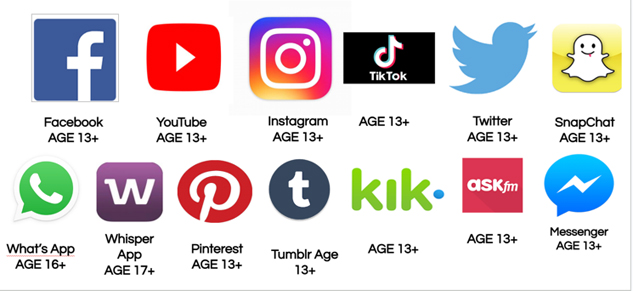
 Throughout the past decade, social media has dramatically impacted how students communicate, learn and live day to day. Social media/technology and mental wellness are linked, and technology both helps and hinders self-perception, coping skills and social connectivity. Below are strategies and resources to address social media-related issues with your students. I have included several takeaways to help school counselors as they tackle social media in the school setting.
Takeaway 1: Social media and popular networking sites
One of the biggest things I like to start with is educating others on what social media entails. Social media can be defined as digital devices and applications that allow users to share and create content or to participate in social networking. These provide several ways for students to communicate, such as Instagram, TikTok, Snapchat, etc.

Takeaway 2: Trauma and posttraumatic stress disorder
Even though social media may have some positives, it also has many negatives that school counselors may encounter on a daily or weekly basis. According to SAMHSA, trauma results from an event, series of events or set of circumstances that is experienced as physically or emotionally harmful or threatening, and that has lasting adverse effects on the individual's functioning and physical, social/emotional and/or spiritual well-being. Someone who is the victim of (or threatened by) violence, injury, or harm can develop a mental health problem called posttraumatic stress disorder (PTSD). PTSD can happen in the first few weeks after an event, or even years later. Therefore, school counselors must recognize that social media plays a major part in trauma for students who can easily view traumatic events at their fingertips. This includes but is not limited to: Experiencing or witness community violence (school shootings), natural disasters (tornados), cyberbullying, self-harm (TikTok challenges), and so much more.
Takeaway 3: Cyberbullying and social media
Cyberbullying has been a major concern in today’s pre-k–12 setting. Much conflict arises from the onset of social media, which in turn may result in a cyberbullying incident. School counselors can help address cyberbullying in these ways:
- Know your state law on cyberbullying
- Know district policy on cyberbullying
- Know reporting and investigation procedures for cyberbullying
- Teach students the consequences of cyberbullying
- Notify the community of the school district’s policy
- Preventive education (Classroom lessons with SRO)
- Staff training
- Parent engagement
Social media can cause major anxiety in students, such fears of missing out, of not having enough likes/views, of negative interactions, etc. Ways school counselors can help students who experience anxiety regarding social media include:
- Prevention programs in your school about anxiety and other mental health disorders
- Help students keep a journal of their experiences (helps to understand triggers)
- Teach students time management (helps them avoid using most of their time on social media)
- Teach students to avoid unhealthy food and substances (proven by research to help boost mood)
One of my favorite things to do when working with students and social media is to conduct a small group. The group focuses on assisting students that are struggling with events that have stemmed from social media such as public embarrassment and violence. Students adjust to this group by engaging in ice-breaker activities, problem solving, self-disclosure, awareness, and more. Students can share their experiences in a safe and non-judgmental environment. (Assistance from the school’s mental health coordinator is utilized in determining students for a school-based group). The groups include topics listed below.
| Session/Topic | Goal for the Session |
| Session 1: Group rules, social media, and what is trauma? | Help students feel comfortable in a new situation and develop appropriate guidelines for group participation and structure. Students learn the basics of social media and definition of trauma. |
| Session 2: Reacting to trauma | Students will be able to discuss ways they have reacted to trauma while also learning how to set boundaries on social media. |
| Session 3: Talking about trauma | Students will discuss whether they have talked to anyone about their trauma; and if so, how it did/did not help them. |
| Session 4: Healthy coping skills | Students learn healthy coping skills for trauma and stress management for social media. |
| Session 5: Healing from trauma and going tech free | Students utilize the skills learned from the previous lessons to begin the healing process of trauma and understand how to use other items besides social media for expressing themselves. |
Other strategies to help aid in help students with social media and their mental health include:
- PTSD Workbook for Teens
- The Social Media Workbook for Teens
- Parent Resources on social media in monthly newsletter
- Social Media Education Websites:
- Preventive education
- Parent night (training parents on social media)
- Kindness group
- Professional development
- Download the apps and use them yourself
- Collaborate with stakeholders for training