
What’s Next for Me? A Postsecondary Exploration Program for All
By Anne Zinn | November 2026
One of the primary roles of a school counselor is to prepare students for the next phase of their life. No matter the transition phase – elementary to middle, middle to high, or high school to “the real world” – school counselors are vital in arming students with the necessary skills and information to succeed as they move ahead.
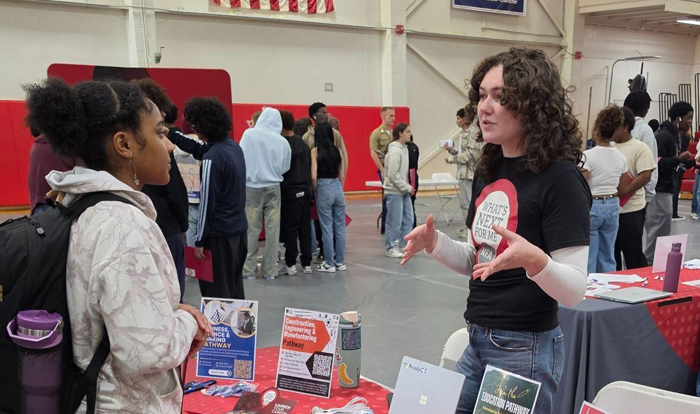
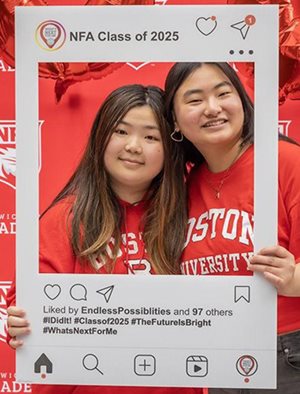
Over the last eight years, the Norwich Free Academy (NFA) in Norwich, Conn., has worked to develop their “What’s Next for Me?” (WNFM) program, which includes a series of opportunities designed to assist all students in exploring, planning and making sound decisions for their life after NFA. WFNM originated within the NFA School Counseling Department, primarily as a one-off event for seniors to determine their future plans and complete an application to something. Now, in 2026, WNFM has become a campus-wide initiative and is supported by multiple departments and community organizations.
 WNFM combines the NFA’s comprehensive school counseling curriculum with events planned through the College & Career Center, offering a wide variety of ways for students to explore options. NFA also employs a postsecondary success counselor (a certified school counselor), who offers individualized support to students and families around financial aid, applications of all types, exploration of postsecondary options, athletic recruitment and more. This position bridges the School Counseling Department and the College & Career Center, working closely to offer both large- and small-scale events to support students' planning processes.
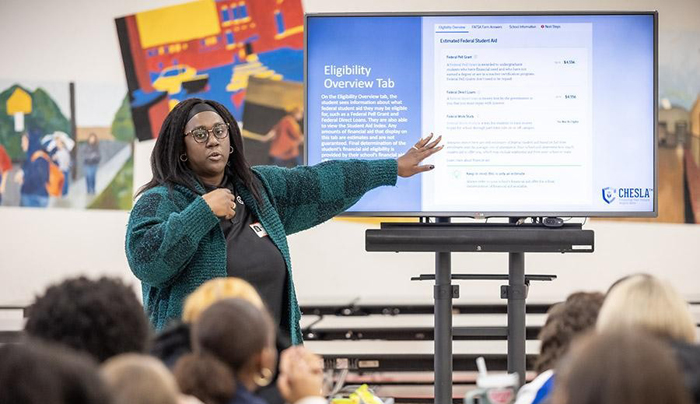
This past year, NFA incorporated the WNFM themes into the course selection process, encouraging students to use their SchooLinks inventory results to guide their course selection for the following year. The NFA Course Catalog can be explored by Holland Code, career theme, or by department/key word search. This helps students envision what classes at NFA might help them explore a specific career they are considering.
construction, engineering and manufacturing. Each has six components: a course sequence (including dual enrollment), exploration opportunities in grades 9–12, employability skills, college preparation, work-based experiences and community and business partnerships.
As students move through their junior year, they can choose to apply for one of the senior programs that offer industry-recognized credentials. These programs are run in partnership with community organizations and allow students to enter the workforce directly after graduation. Currently, NFA offers industry credentials in manufacturing, CNA, EMT and medical interpreter.
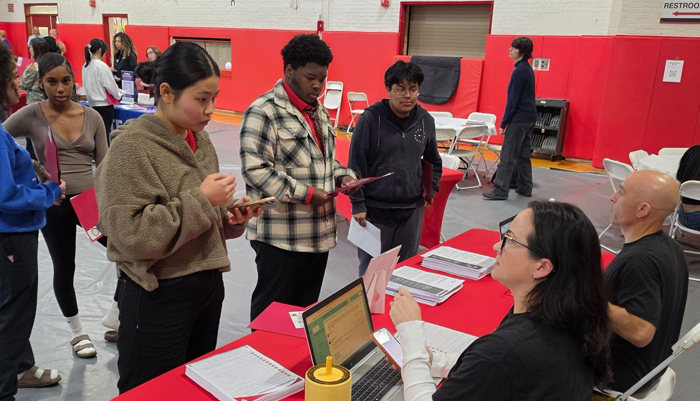
Remember, NFA's program did not start out as a series of events for all grade levels. It began as one event, designed for seniors to complete an application and has evolved each year, gaining traction along the way.
For school counselors hoping to bring a similar program to their school, here are some suggestions to get started:
Anne Zinn is head of the School Counseling Department and a postsecondary success counselor at Norwich Free Academy in Norwich, Conn. Follow @nfa_wnfm on Instagram to see up-to-date information and events.
Over the last eight years, the Norwich Free Academy (NFA) in Norwich, Conn., has worked to develop their “What’s Next for Me?” (WNFM) program, which includes a series of opportunities designed to assist all students in exploring, planning and making sound decisions for their life after NFA. WFNM originated within the NFA School Counseling Department, primarily as a one-off event for seniors to determine their future plans and complete an application to something. Now, in 2026, WNFM has become a campus-wide initiative and is supported by multiple departments and community organizations.
WNFM combines the NFA’s comprehensive school counseling curriculum with events planned through the College & Career Center, offering a wide variety of ways for students to explore options. NFA also employs a postsecondary success counselor (a certified school counselor), who offers individualized support to students and families around financial aid, applications of all types, exploration of postsecondary options, athletic recruitment and more. This position bridges the School Counseling Department and the College & Career Center, working closely to offer both large- and small-scale events to support students' planning processes.A Grade-by-Grade Framework
Each grade has a theme and guiding questions:- Grade 9 – Exploration: Students ask, "Who am I?" and explore their interests, values, skills and career clusters, and consider which courses and clubs fit. This exploration is supported by the ninth-grade Career Expo.
- Grade 10 – Research: Students dig into what careers exist within a cluster, what people in them do and what training they require. This exploration is supported by career panels, exposing students to various jobs within a career cluster, and small-group conversations with NFA alumni, allowing students to ask questions and hear about a day in the life.
- Grade 11 – Test Out Career Options: Students are provided opportunities to gain real experience through job shadows, volunteering, mini internships, part-time jobs and informational interviews.
- Grade 12 – Prepare and Take Action: Students take concrete steps toward their plan. Senior year begins with a large-scale exploration event, allowing students to self-select areas where they need help; throughout the year, NFA offers a variety of mini sessions to support the application and financial aid process, the scholarship search process, the job application process and more. The year ends with a big decision day celebration for the entire class, recognizing all pathways.
This past year, NFA incorporated the WNFM themes into the course selection process, encouraging students to use their SchooLinks inventory results to guide their course selection for the following year. The NFA Course Catalog can be explored by Holland Code, career theme, or by department/key word search. This helps students envision what classes at NFA might help them explore a specific career they are considering.
NFA Pathways and Credentials
As part of WNFM, NFA offers multiple pathway options that allow students to engage in a series of academic and work-based experiences that prepare them for future careers. The pathways are business/banking; culinary and baking; early childhood education; healthcare; andconstruction, engineering and manufacturing. Each has six components: a course sequence (including dual enrollment), exploration opportunities in grades 9–12, employability skills, college preparation, work-based experiences and community and business partnerships.
As students move through their junior year, they can choose to apply for one of the senior programs that offer industry-recognized credentials. These programs are run in partnership with community organizations and allow students to enter the workforce directly after graduation. Currently, NFA offers industry credentials in manufacturing, CNA, EMT and medical interpreter.
Making It Work
The WNFM program at NFA has reached this level of integration across campus due to buy-in from all parties (which took some time!); this undertaking cannot rest solely on the school counseling department. Administration, faculty and the community all need to share the belief that the school is building the next workforce. NFA relies heavily on our community partnerships, which include Connecticut State Community College, Eastern Connecticut Workforce Investment Board, United Way, ReadyCT and the NFA Foundation.
Where to Start
Remember, NFA's program did not start out as a series of events for all grade levels. It began as one event, designed for seniors to complete an application and has evolved each year, gaining traction along the way.For school counselors hoping to bring a similar program to their school, here are some suggestions to get started:
- Take inventory: You likely already have pieces of this program that just aren't formalized.
- Start with one event: A career expo or senior exploration day is a manageable first project.
- Connect with your regional workforce board: It can help with funding, partnerships and program design.
- Build pathways before credential programs: Start with a field trip, a single class or partnership development.
- Add small, inexpensive certifications: NFA builds OSHA 10 (online, $25 per student) into its Intro to Manufacturing class and ServSafe Food Handler (online, $15 per student) into its Culinary classes.
The Bottom Line
Building a comprehensive program is a process. It took NFA eight years, and our program is still evolving and adapting to new challenges each year. The goal isn't to choose a pathway for students but to support their exploration and growth. Start small, evaluate what you have and build from there.Anne Zinn is head of the School Counseling Department and a postsecondary success counselor at Norwich Free Academy in Norwich, Conn. Follow @nfa_wnfm on Instagram to see up-to-date information and events.